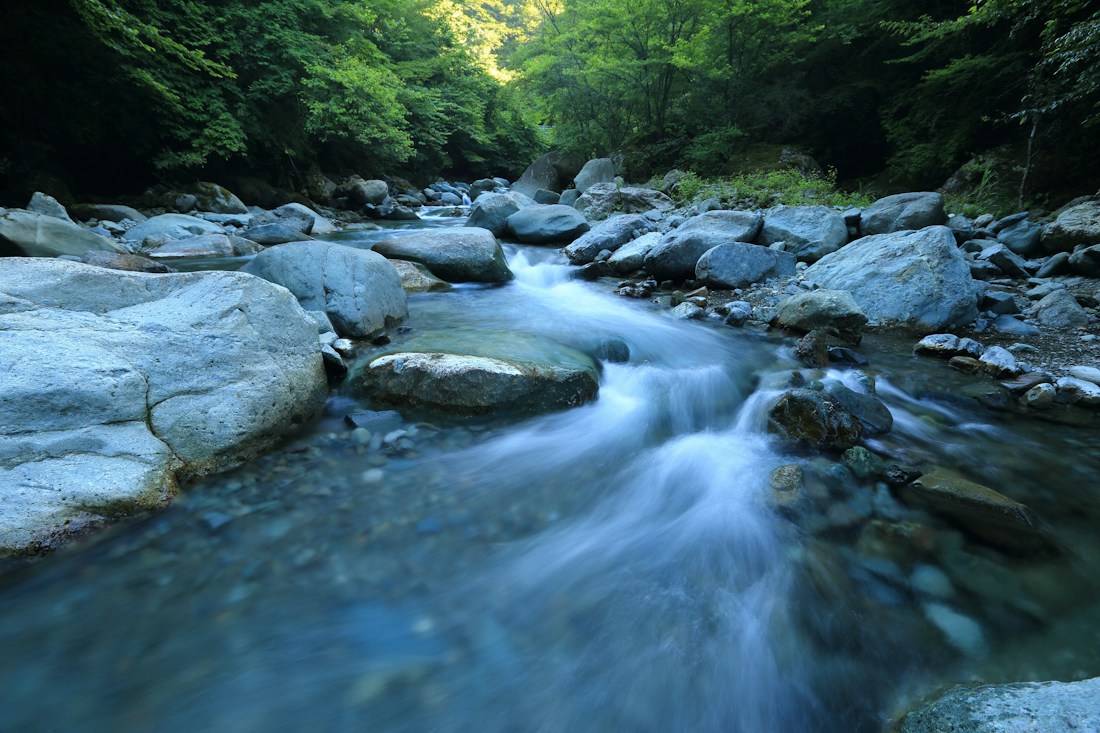
Run-of-river
Uses natural river flows with limited storage; output often follows seasonal hydrology.
Hydropower converts the potential and kinetic energy of water into electricity, with project design shaped by available head, flow, geography and environmental obligations.
Explore the story ↗
Water directed through a turbine transfers energy to a rotating shaft connected to a generator. Power depends on the volume of water passing through the system, the effective head and equipment efficiency. Reservoir, run-of-river and pumped-storage schemes serve different purposes.
Uses natural river flows with limited storage; output often follows seasonal hydrology.
Stored water can provide dispatch flexibility, subject to water availability and operating constraints.
Moves water between reservoirs at different elevations to store and later recover electrical energy.

Hydropower planning must consider river ecology, sediment, environmental flows, community needs and water-use rights alongside technical feasibility.
Examine flow-duration curves, rainfall, catchment behaviour and flood conditions.
Assess intakes, dams where relevant, waterways, penstocks and powerhouse siting.
Match turbine types and generators to head, flow and operating range.
Plan environmental flows, sediment management, monitoring and long-term safety.
Impulse turbines are commonly associated with high-head, lower-flow applications.
Reaction turbines are widely used across medium-head conditions.
Adjustable-blade reaction turbines are commonly suited to lower-head, higher-flow conditions.
Water resource and catchment considerations

Engineering and site integration

Environmental flows and water management